
How the work gets made.
One team of 25+ engineers, designers and product people, working from one office. Watch a project move from the first workshop to launch, or ask Sammy anything along the way.




Sammy, AI guide
Hi, I'm Sammy, the studio's AI guide. Here is how the team works.
The process
From listening to staying.
Every project moves through the same stages with the same people. Scroll through them, or watch the film above.
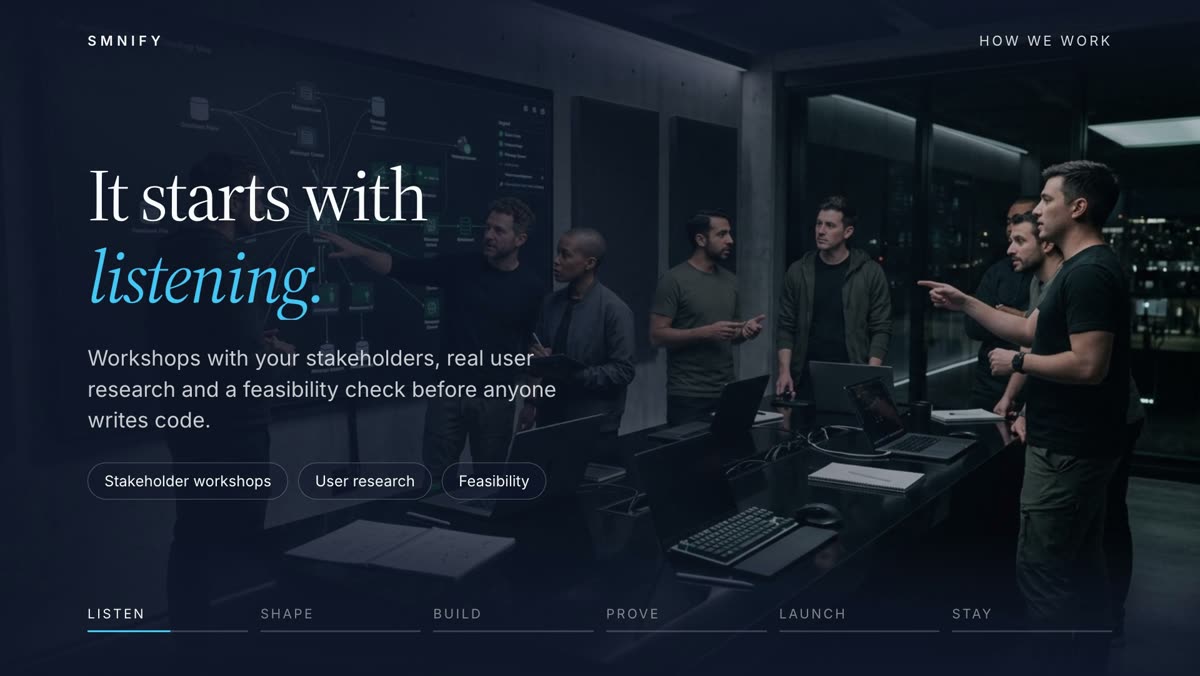
Listen
Discovery and strategy
Before anything is designed, the team learns the business: who it serves, what has to be true for it to work, and what could stop it.
- Stakeholder workshops
- User research and interviews
- Competitive analysis
- Technical feasibility check
- A roadmap you agree to
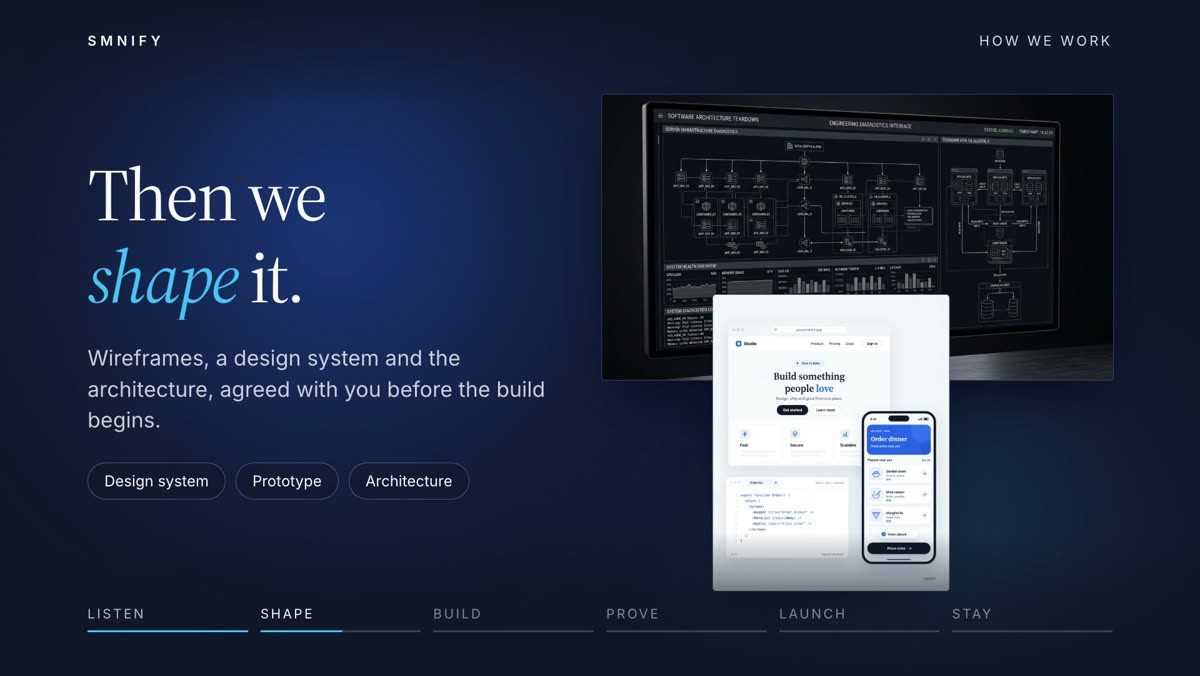
Shape
Design and architecture
Ideas become screens and systems you can react to, long before code makes them expensive to change.
- Wireframes and clickable prototypes
- High-fidelity design
- A design system built to grow
- Database schema and API design
- Infrastructure architecture
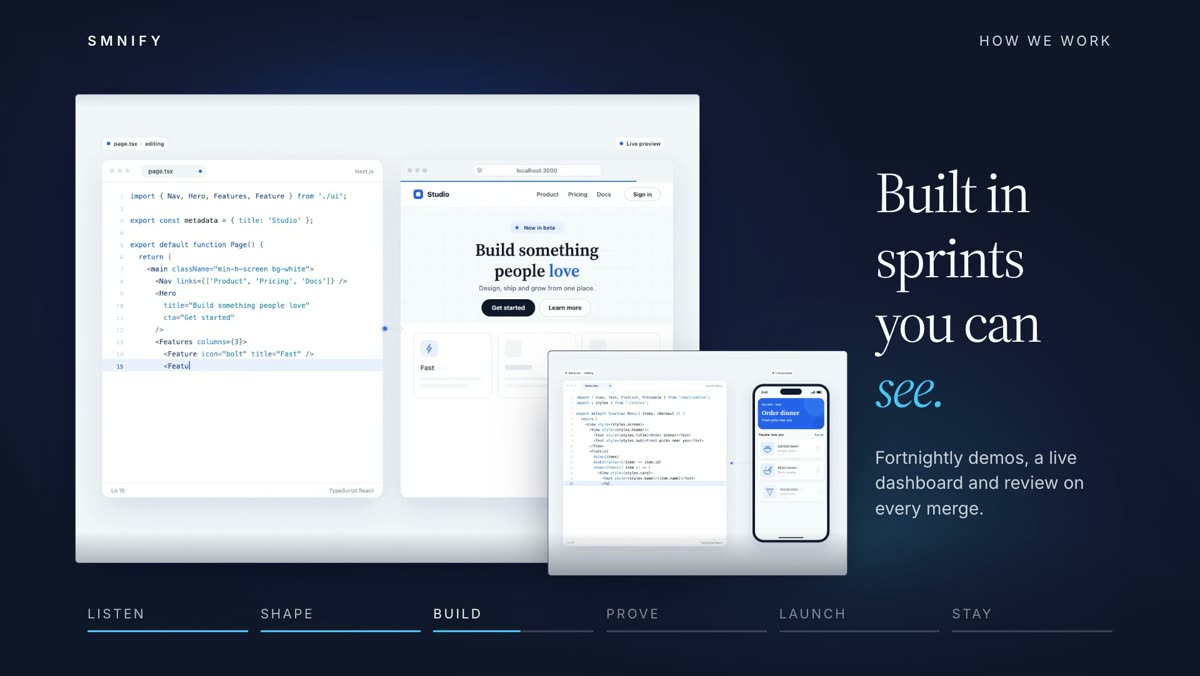
Build
Development
The product is built in short sprints with a demo at the end of each, so you see progress instead of hearing about it.
- Sprints with regular demos
- Frontend and backend together
- Third-party integrations
- Every change code reviewed
- Documentation written as it goes
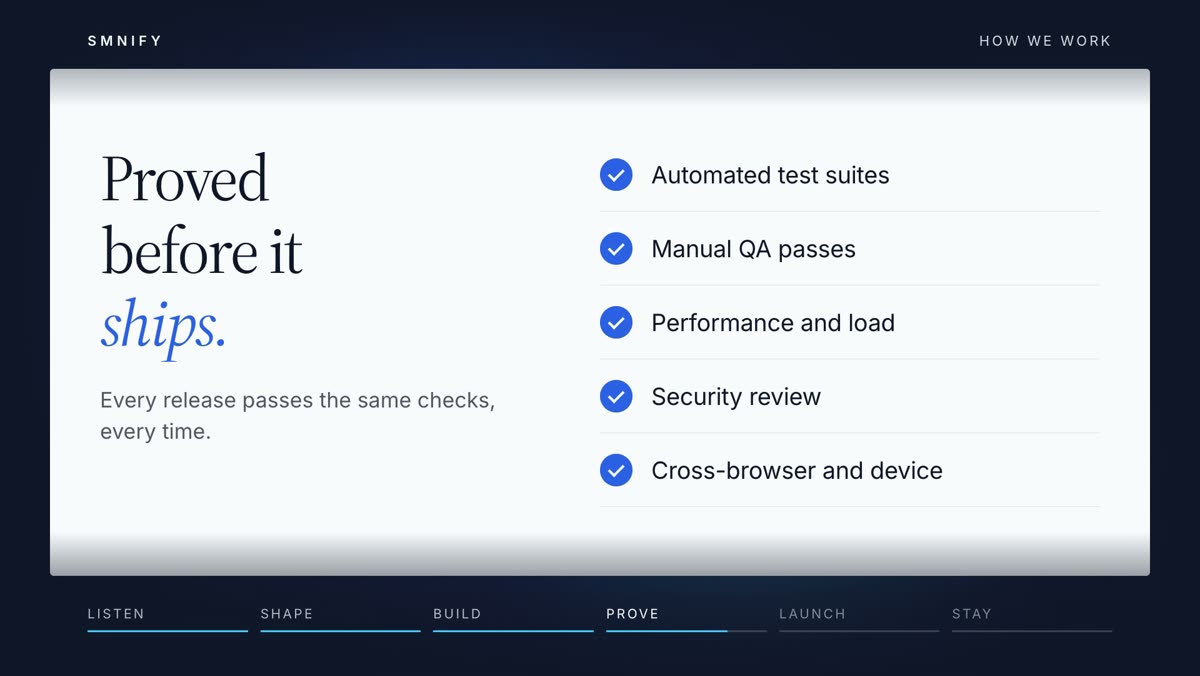
Prove
Quality assurance
Every release passes the same gate, so quality is a habit rather than a scramble in the final week.
- Automated unit and integration tests
- Manual QA on real devices
- Performance and load testing
- Security review
- Cross-browser checks
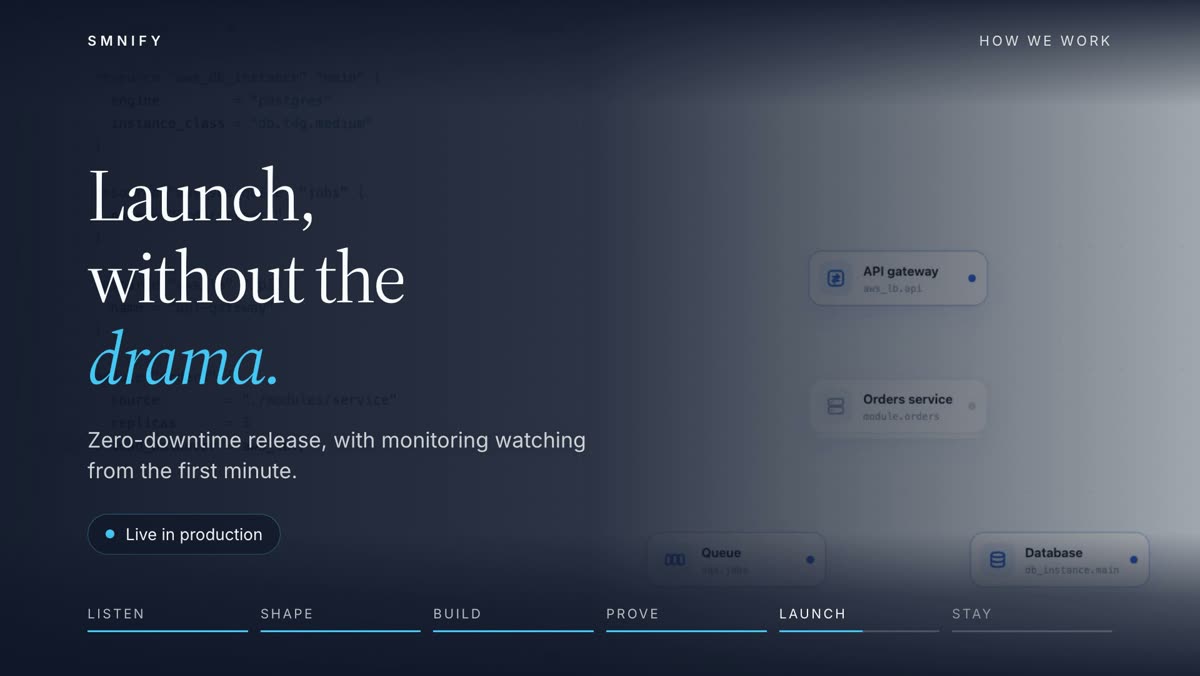
Launch
Release and deployment
Launch day is planned, rehearsed and watched, so it is the quietest day of the project.
- Production infrastructure
- CI/CD pipelines
- Data migration
- SSL, CDN and hardening
- Monitoring and alerting
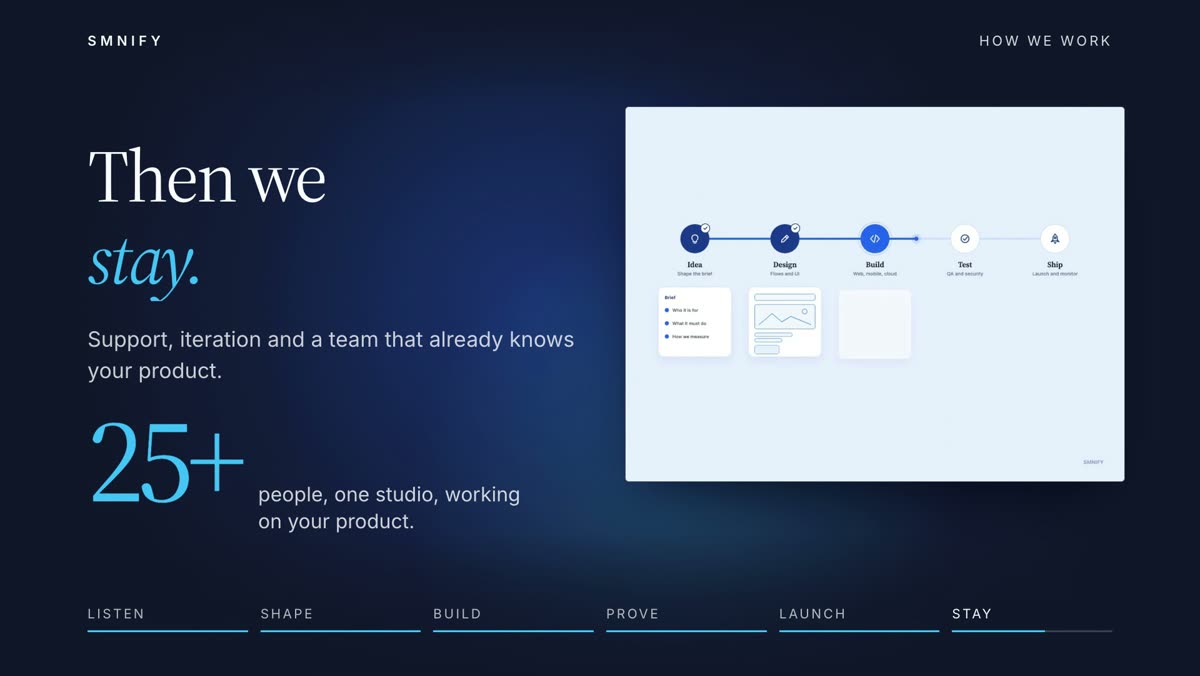
Stay
Support and evolution
After launch the same people stay with the product, improving it as real users teach everyone something new.
- Monitoring and incident response
- Performance tuning
- Iterations from real usage
- Upgrades and maintenance
- Ongoing product advice
You always know where things stand.
No status reports to chase. You work alongside the team in the open.
Every day
A shared Slack channel with the people building your product, not an account manager relaying messages.
Every week
A sync call to review progress, unblock decisions and agree what comes next.
Always on
A live project board, so you can check where things stand without having to ask.
Every other week
A demo day where you use the latest build and steer what happens next.
How we hold ourselves
What stays the same on every project.
No templates, no shortcuts
Every product is architected for its own requirements and goals, not adapted from the last one.
Senior-led
Senior engineers and architects lead every project. Nothing is handed down and forgotten.
Honest timelines
Realistic estimates, clear milestones, and an early word when something changes.
Built to last
The team optimises for the product you will still be running years from now, not a rushed launch.
Knowledge stays with you
Documentation and walkthroughs, so your own people understand every part of the codebase.
In it for the long run
Support, scaling and the next version, from the people who built the first one.
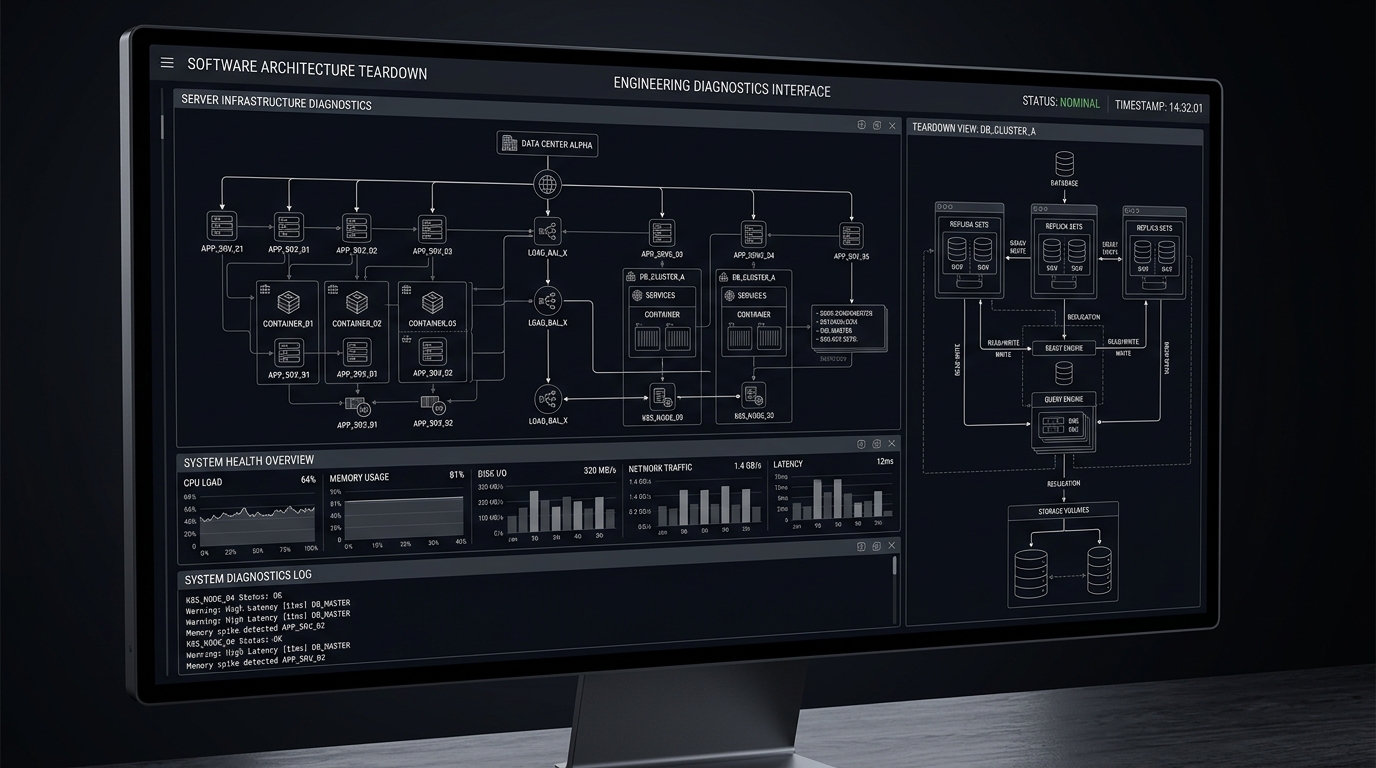
You own all of it.
When the work is done, everything the team made is yours, documented and handed over properly.
- Source code and its documentation
- Design files and the design system
- API documentation
- Deployment and runbook guides
- Training for your team
- A knowledge base to grow with
Want to see your product move like this?
Tell the team what you are working on. You will hear back with a plan, not a pitch.